
Customer management
Customers, follow-ups and deals,
with the whole sales process in view.
Customers, orders, inventory and approvals, built around how you already work,
on desktop and mobile, with clear data and easier teamwork.
Your familiar tools, on a dependable stack
 WeCom
 Alipay
 MySQL
 PostgreSQL
 Redis
 Docker
 Nginx
 Linux
 Alibaba Cloud
 Cloudflare
 Python
 Node.js
Chosen and connected as each project requires
Customers, follow-ups and deals,
with the whole sales process in view.

Purchasing, stock and movements,
so books match the shelves without spreadsheets.

Leave, expenses and contracts
move online, with progress always visible.

Business data rolls up automatically,
always there, no waiting for reports.
Forms, fields and approval steps
designed around how you work today.
Permissions by department and role:
everyone sees what they should, and nothing else.
Runs in the browser,
and on your phone when you are out.
Sales, stock and receipts,
charted automatically.
WeCom, spreadsheets and existing systems,
connected where you need them.
Audit trails and regular backups;
export your data any time.
We learn how work happens today and where it sticks, and agree on the problems to solve.
We map the workflow and key screens; design starts once you approve them.
Frequent actions within easy reach: less typing, faster finding.
Modules ship in priority order, each one ready to try.
We import historical data, run a small pilot and train every role.
After go-live we keep following up, improving and extending as agreed.
Scope and ownership follow the signed contract.
Common questions, answered before you start.
Off-the-shelf tools are quick to adopt and suit standard processes; custom fits better when your process is distinctive or must connect to existing tools. We help you decide, and may suggest starting with an existing product.
Yes. We tidy fields and formats first, import in bulk, then check the results with you.
It depends on modules and process complexity. We recommend launching the most-used modules first and refining as you go; milestones go into the project plan.
It can run on a cloud server in your name or an environment you choose. The data is yours and can be exported any time.
We design around current habits, train each role before launch (at least 10 sessions), provide a manual and answer questions throughout the pilot.
The system is modular and can keep growing. New features and improvements are free for 3 months after launch; after that, new requests get their own scope and cost.
Tell us about your customers, team and goals.
We will agree on the right scope, budget and delivery plan.
Share your idea. We’ll find the next step together.
Smaller projects can go live in about a week; multi-page custom sites take longer. Timing depends on page count, feature complexity and how ready your materials are. After our first conversation, design, review, build and sign-off milestones go into the project plan.
Start with your brand introduction, existing content, reference websites, and main goals. We can discuss the scope while the details are still taking shape.
Content management can be configured for your project, with editing and maintenance explained at handover.
We reply within 10 minutes of your message.
Many customers first open your website on a phone. We plan layout and interaction separately for desktop, tablet and phone, rather than shrinking the desktop version.
On small screens, the key message and contact options come first, with details following naturally.
Buttons and links have touch targets of at least 44px, forms bring up the right keyboard, and menus are reachable with one hand.
We check layout, orientation, text wrapping, images and forms in common phone, tablet and desktop browsers.
The 18cat.com site you are reading is built this way. Narrow your browser window or open it on a phone to see how navigation, cards and forms rearrange.
The longer visitors wait, the more likely they are to leave. We work to Google's Core Web Vitals so your main content, services and contact options appear quickly.
These are Google's published “good” thresholds, measured at the 75th percentile of real visits.
We test mobile and desktop with PageSpeed and Lighthouse to pinpoint issues with images, fonts, scripts and third-party code.
Images are served at the right size and in modern formats; the first screen loads first and the rest follows when needed.
We follow the real-visitor experience in Search Console and analytics, and keep improving based on the data.
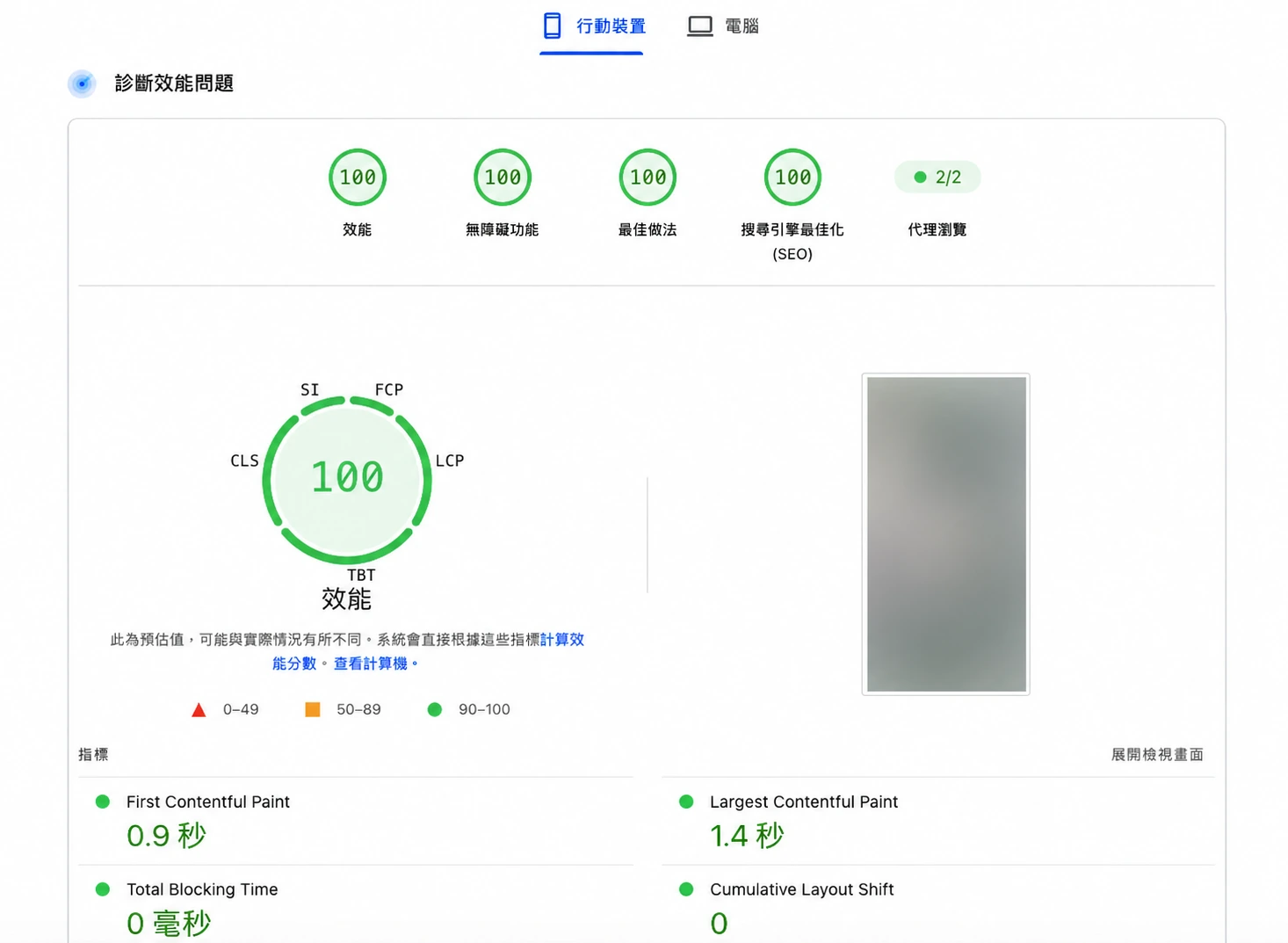
18cat.com serves AVIF and WebP images sized for each screen, loads its Chinese font on demand and caches static files long-term. You can test this site with Google's tool right now.
Results vary with network, device and time of testing. Search rankings also depend on content relevance and other factors.
Read Google’s page-experience guidanceText, images, articles, products and team details can be opened up for you to edit. Anything unfamiliar, we'll teach you until you're comfortable.
Edit the content on the left to update the preview. This demonstration does not save or publish changes.
Explore our services, recent projects and contact details in one place. Take a look around, and tell us about the project you have in mind.
During planning we agree what you will edit, who edits it, and whether you need a CMS.
Editing, approval and publishing rights are assigned per person; important changes are previewed before going live.
AI can help tidy text and draft summaries and translations; you approve everything before it is published.
SEO gets your site into search results; GEO helps AI assistants such as ChatGPT and Doubao describe you accurately when they answer. Both start from what customers ask and carry through content, page structure and post-launch checks, continued within the agreed scope.
 Google
 Bing
 Baidu
 DuckDuckGo
 Naver
 ChatGPT
 Perplexity
 Gemini
 Doubao
 Kimi
 DeepSeek
Start with your business, audience, service areas and customer questions. Map the language customers actually use to the pages that can answer their needs.
Create focused service, product and case-study content, with clear titles, summaries and headings. Connect related pages so both visitors and search engines can find the important information.
Check robots rules, sitemaps, key links, duplicate URLs and page status codes. For multilingual projects, configure hreflang where appropriate to identify language versions.
Organize accurate business, product or article information and add appropriate structured data. Keep titles and descriptions faithful to the page so search snippets have a clear basis.
With the required access, configure webmaster tools such as Search Console, submit the sitemap and review indexing issues, queries, impressions and clicks. Turn findings into an actionable list.
Use search questions and enquiry feedback to improve service details, case studies and FAQs. Evaluate useful visits and enquiry paths, then refine the content structure and next-step actions.
A search for a service area, design type or project requirement should lead to a relevant service or case-study page. We map those needs to content, clarify project details and scope, provide a clear contact action, and review which searches lead to useful enquiries.
Services, who they are for, price ranges and common questions are written as clear Q&A and lists. One point per paragraph makes it easy for AI to extract and cite the source.
Company name, services, area and contact details match across your website, maps, platform accounts and third-party listings, so AI is less likely to confuse you with someone else.
Each page carries suitable structured data for the organisation, services, FAQs and articles. We provide a sitemap and an llms.txt guide, and confirm crawlers such as GPTBot and PerplexityBot can reach public pages.
Using an agreed list of questions, we check whether ChatGPT, Perplexity, Doubao and others mention your brand and describe it accurately, then add or correct content accordingly.
Type “interior design firm Shenzhen” into a search engine and you get a list of pages; ask an AI “Which interior design firms in Shenzhen are reliable?” and you get a written answer. SEO puts you in the list; GEO puts you in the answer, with the facts right.
AI answers are generated by each platform's models, so citations or recommendations cannot be guaranteed. Our job is to make your content accurate, clear and accessible.
From brand expression and experience design to development and handover, bring your idea to life as a useful website.
Give important pages distinct titles and descriptions, with appropriate link-preview artwork. Search engines choose the final snippet; we check that the content and page settings are consistent.
 Search Console
See search queries, page visibility and indexing issues.
 GA4
Understand acquisition, content engagement and key events along the path to an enquiry.
 Matomo
Choose an analytics setup for the project and review visits, content and conversion goals.
 PageSpeed Insights
Prioritize performance work using loading, responsiveness and layout-stability diagnostics.
Tool integrations, access and ongoing maintenance are agreed in the project scope. Each search platform determines its own indexing and rankings.
Open the files 18cat.com uses for this itself:
Many enquiries are lost not for lack of interest, but because visitors can't find the way in, don't know what to write, or hear nothing back. We get all three right.
Every key page has clear contact options and calls to action, always visible on mobile too.
Choices instead of blank boxes guide visitors through project type, budget and timing, with optional file uploads.
Enquiries arrive in live chat with a copyable summary, so you can follow up promptly.
Tell us what you need in an online conversation. We will reply with care.
Plan a mobile app around its core tasks. Start with user scenarios, features and release platforms, then agree on design and development scope.
Organize everyday business into workflows, roles and data relationships, and plan interfaces around how people actually work.
Bring services into familiar platforms. Start with use cases and key journeys, then agree on platform features, content updates and integrations.
We collect only what is needed to provide the service. Below is what 18Cat's own website and client portal already do — the same approach we bring to client projects.
Every page is served over HTTPS, and plain HTTP requests are redirected.
The client portal supports two-factor authentication and email codes, and lets you review and end sign-in sessions.
Permissions are set per member and per site, so roles such as finance or read-only see only what they need.
Keys and credentials for connected services are stored encrypted and never shown in lists.
Important actions are logged, so issues can be traced.
Visit statistics use no cookies; visitors choose whether to allow any others.
Multilingual is more than translated text. We also adapt navigation, layout, dates and contact details, so every version reads like a local website.
 简体中文
从内容到体验,传递清楚、一致的品牌表达。
 繁体中文
從內容到體驗,傳遞清楚、一致的品牌表達。
 English
A clear, consistent brand experience, across languages.
 日本語
言葉と体験を通して、ブランドの想いを届けます。
 한국어
언어와 경험을 통해 브랜드의 가치를 명확하게 전달합니다.
 Français
Une expérience de marque claire et cohérente, dans chaque langue.
 Deutsch
Ein klares, einheitliches Markenerlebnis – in jeder Sprache.
 Español
Una experiencia de marca clara y coherente, en cada idioma.
 Português
Uma experiência de marca clara e consistente, em cada idioma.
 Italiano
Un’esperienza di marca chiara e coerente, in ogni lingua.
 العربية
تجربة علامة تجارية واضحة ومتسقة، بكل لغة.
We draft translations with DeepSeek, Doubao, Claude and ChatGPT, keeping brand terms consistent.
A person reviews tone, terminology and cultural fit on every page, avoiding stiff literal translation.
We allow for different text lengths and fonts, and set hreflang so search engines show the right language version.
This website is available in Simplified Chinese, Traditional Chinese and English; switch languages at the bottom of the page.
You do not need every asset ready. Start with your goals and existing content to give the conversation direction.
Describe your services, your audience and the most important action visitors should take.
Gather your logo, introduction, product or project assets, and explain which details you like in reference websites.
Share your existing website, target launch date and budget range. We can clarify the unknowns together.
Review the content and key journeys, then confirm handover against the agreed scope.
Check brand names, contact details, text and image rights, and each page's title and description.
Check navigation, forms, contact links and key actions on desktop and mobile, including clear success and error feedback.
Confirm domains, certificates, permissions and renewals, then organize management links, instructions and maintenance scope.
Keep your website aligned with your business and give maintenance a clear rhythm.
Review product, team and contact details regularly. Update articles and project showcases through the agreed workflow.
Monitor availability, domain and certificate expiry dates, and review traffic and performance as needed.
Separate routine maintenance from new features, then agree priorities, scope and timing for the next stage.
An idea does not need a fixed format. Start with your goals and explore how websites, apps, systems and existing tools can solve the problem.
Start with use cases, current workflows and desired outcomes to define the scope together.
Agree an approach, stages and deliverables based on your actual needs.
Designers, consultants and partners are welcome to introduce brands that need a website. Discuss the project and partnership first, then confirm attribution and settlement terms.
Partnership terms, rewards and settlement timing are agreed before the project begins.
Manage your website and see more details.
Checking sign-in options…
Opening your workspace…
New here? A customer account is created automatically after successful Google or email-code verification.